
GPlately 2.0 is here
GPlately version 2.0 has been released on GitHub — a major milestone for our open-source Python library for plate tectonic reconstructions. Here's a quick tour of what it can do.

I am an ARC Industry Research Fellow in the School of Geography, Earth and Atmospheric Sciences at The University of Melbourne. I am an expert in fusing Earth evolution models with data to understand how groundwater moves critical minerals through the landscape. Related research interests include the cycling of volatiles within the Earth, probabilistic thermal models of the lithosphere to unravel past tectonic and climatic events, and understanding the how enigmatic volcanoes form.
I am a vocal advocate for the integral role of geoscience in responding to challenges we face in transitioning to the carbon-neutral economy. As an expert in my field, I have been interviewed in national and international print media, TV, and radio on a wide variety of subjects including earthquakes, volcanoes, groundwater, and critical minerals.
GPlately version 2.0 has been released on GitHub — a major milestone for our open-source Python library for plate tectonic reconstructions. Here's a quick tour of what it can do.
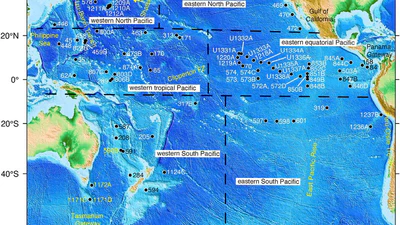
Our paper in Frontiers in Earth Science presents six new regional reconstructions of the carbonate compensation depth across the Pacific Ocean over the last 30 million years, …
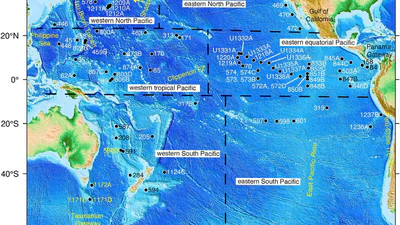
Reconstructing regional carbonate compensation depth variability in the Pacific Ocean since the Oligocene to understand deep-sea carbon cycling.
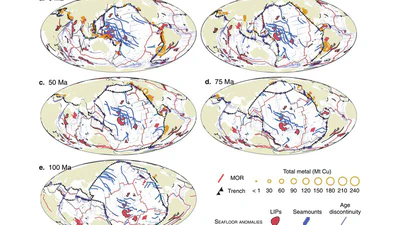
Our paper in International Geology Review shows that fracture zones, seamounts, and large igneous provinces on the subducting ocean floor promote porphyry copper formation — …
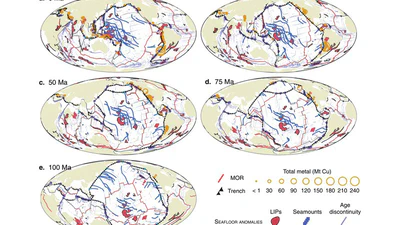
Plate tectonic reconstructions and machine learning show that subducting seafloor anomalies promote porphyry copper deposit formation.
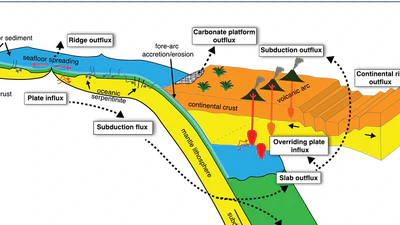
Our paper in G-Cubed couples plate tectonic models with thermodynamic carbon outflux estimates to build the most comprehensive reconstruction of solid Earth carbon degassing and …
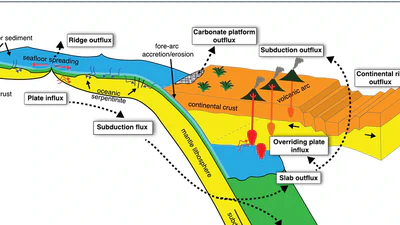
Coupling plate tectonic models with thermodynamic carbon outflux estimates to reconstruct solid Earth carbon degassing over the last billion years.

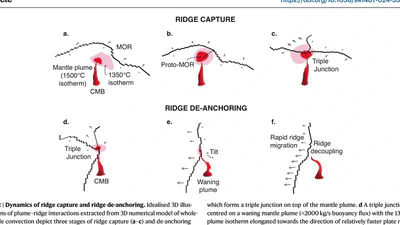
Our paper in Nature Communications reveals a new mechanism for mid-ocean ridge migration: plumes with high buoyancy flux can capture and anchor ridges in place, and when they wane, …
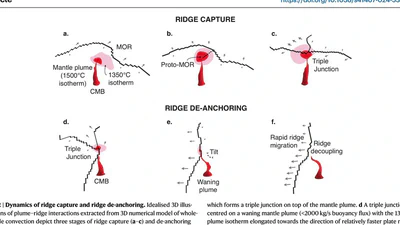
Numerical modelling shows that high-buoyancy mantle plumes can capture and de-anchor spreading ridges, enabling their migration over vast distances.
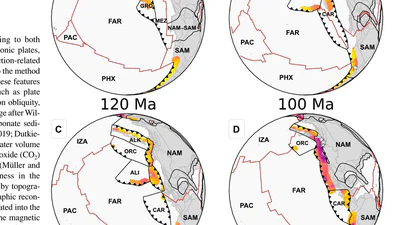
A positive-unlabeled machine learning model predicts spatio-temporal copper prospectivity along the American Cordillera from subduction zone dynamics.
