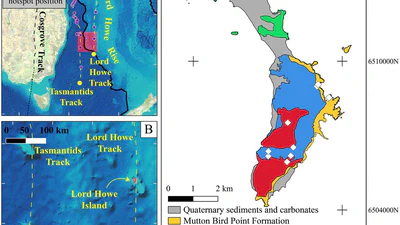
The isotopic origin of Lord Howe Island reveals secondary mantle plume twinning in the Tasman Sea
First radiogenic isotope data from Lord Howe Island lavas reveal a secondary mantle plume twin in the Tasman Sea with a distinct deep mantle source.


First radiogenic isotope data from Lord Howe Island lavas reveal a secondary mantle plume twin in the Tasman Sea with a distinct deep mantle source.
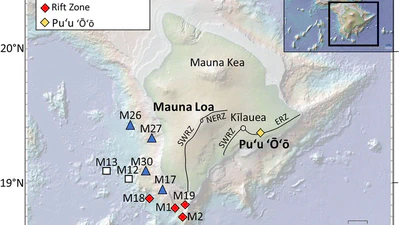
Iron isotope and hafnium data from Kīlauea and Mauna Loa lavas reveal how igneous differentiation and mantle source heterogeneity shape Hawaiian volcanism.

Mantle plumes are buoyant upwellings rising from the Earth’s core-mantle boundary to its surface, generating hotspot chains that track the direction of plate motion. Eastern …


Deep mantle plumes are buoyant upwellings rising from the Earth’s core-mantle boundary to its surface, and describing most hotspot chains. Mechanisms to explain dual chains of …
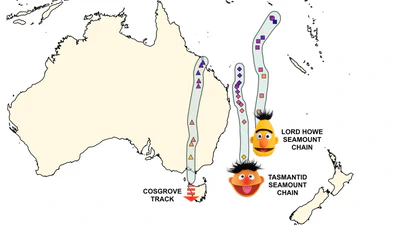
We propose that slab-induced plume branching can explain the formation of parallel hotspot chains observed in the oceanic and continental record. Using plate tectonic …
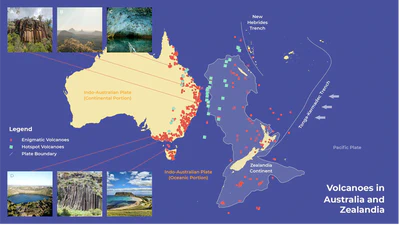
Long-lived, widespread intraplate volcanism without age progression is one of the most controversial features of plate tectonics. The eastern margin of Australia and Zealandia has …
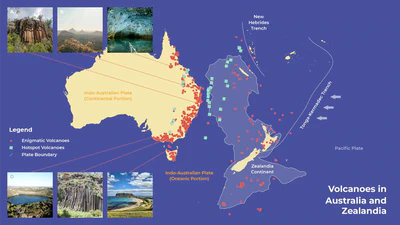
Modelling 100 million years of subducted slab volume reveals that bursts in slab flux trigger intraplate volcanism in eastern Australia.
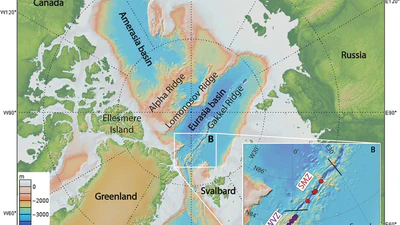
Seafloor lavas from the ultraslow Gakkel Ridge preserve geochemical signatures of an Early Cretaceous subduction zone, revealing ancient mantle heterogeneity beneath the Arctic …

Investigating the link between changes in subducting slab flux and the triggering of intraplate volcanism, with a focus on the volcanic record of eastern Australia.