Simon Williams

Simon Williams

ARC Future Fellow
Simon Williams is a geophysicist specialising in gravity and magnetic data analysis to define sedimentary basins and understand plate tectonics. Previously a long-standing member of the EarthByte Group, he now leads marine geoscience research at IMAS.
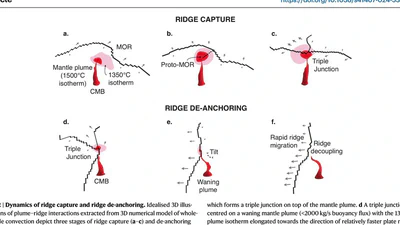
Spreading ridge migration enabled by plume-ridge de-anchoring featured image

Spreading ridge migration enabled by plume-ridge de-anchoring

Numerical modelling shows that high-buoyancy mantle plumes can capture and de-anchor spreading ridges, enabling their migration over vast distances.

avatar
Dr. Ben Mather
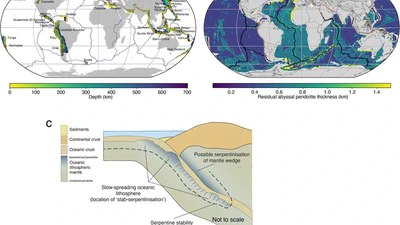
Global Hydrogen Production During High-Pressure Serpentinization of Subducting Slabs featured image

Global Hydrogen Production During High-Pressure Serpentinization of Subducting Slabs

Quantifying global hydrogen production from high-pressure serpentinisation of subducting slabs over the last 5 million years.

avatar
Andrew S. Merdith
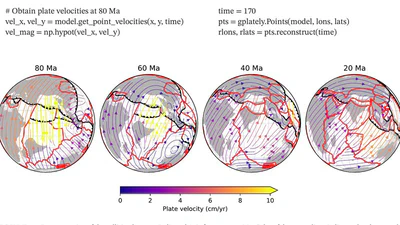
Deep time spatio-temporal data analysis using pyGPlates with PlateTectonicTools and GPlately featured image

Deep time spatio-temporal data analysis using pyGPlates with PlateTectonicTools and GPlately

GPlately: a Python interface for deep-time spatio-temporal data analysis using pyGPlates, simplifying plate tectonic reconstructions.
avatar
Dr. Ben Mather
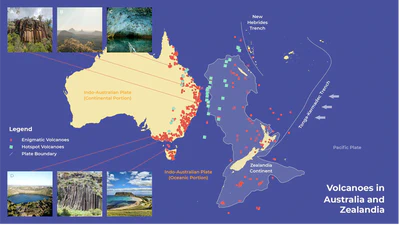
Unravelling the origins of volcanism along Eastern Australia and the Tasman Sea featured image

Unravelling the origins of volcanism along Eastern Australia and the Tasman Sea

Mantle plumes are buoyant upwellings rising from the Earth’s core-mantle boundary to its surface, generating hotspot chains that track the direction of plate motion. Eastern …

avatar
Dr. Ben Mather
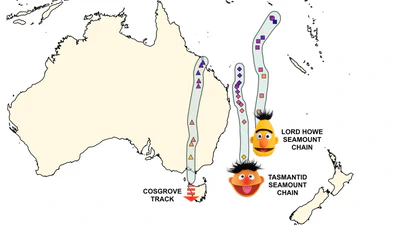
Parallel volcanic chains generated by plume-slab interaction (invited) featured image

Parallel volcanic chains generated by plume-slab interaction (invited)

Deep mantle plumes are buoyant upwellings rising from the Earth’s core-mantle boundary to its surface, and describing most hotspot chains. Mechanisms to explain dual chains of …
avatar
Dr. Ben Mather
Slab-induced plume branching connects parallel hotspot chains featured image

Slab-induced plume branching connects parallel hotspot chains

We propose that slab-induced plume branching can explain the formation of parallel hotspot chains observed in the oceanic and continental record. Using plate tectonic …
avatar
Dr. Ben Mather
DP20 featured image

DP20

Eruption and disuption: how Earth's deep interior and surface communicate

avatar
Maria Seton