Our latest paper reveals how plate tectonics has driven Earth's climate shifts

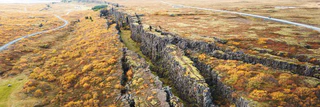 Carbon emissions along divergent plate boundaries modulate icehouse-greenhouse climates.
Our new paper, published in Communications Earth & Environment, reveals how plate tectonics has controlled Earth’s long-term climate by regulating the flow of carbon between the deep Earth and the atmosphere.
Key finding
Earth’s climate has alternated between warm “greenhouse” periods and cold “icehouse” periods over hundreds of millions of years. We show that it is the changing balance between volcanic CO₂ outgassing — from mid-ocean ridges, continental rifts, and volcanic arcs combined — and the sequestration of carbon into oceanic lithosphere that drives these major climate shifts. During greenhouse periods, total volcanic emissions outpace carbon sequestration; during icehouse periods, the oceans absorb and store more carbon than volcanoes release.
Challenging the conventional view
Our results challenge the long-standing assumption that volcanic arcs above subduction zones are the dominant source of tectonic CO₂. Before 100 million years ago, CO₂ emissions from mid-ocean ridges and continental rifts — where tectonic plates pull apart — actually exceeded arc emissions, making divergent plate boundaries the primary driver of atmospheric carbon.
A critical turning point came around 120 million years ago with the evolution of planktic calcifiers, organisms that lock carbon into their shells and settle on the ocean floor. Their emergence dramatically enhanced the ocean’s ability to sequester carbon, fundamentally reshaping the long-term carbon cycle and contributing to the transition toward cooler icehouse conditions.
Media coverage
This research has resonated well beyond the academic community. Our article on The Conversation has been read by more than 33,000 people, and the work was featured in an editorial in New Scientist.
Read the full paper: Mather, B., Müller, R.D., Dutkiewicz, A., & Zahirovic, S. (2026). Carbon emissions along divergent plate boundaries modulate icehouse-greenhouse climates. Communications Earth & Environment. DOI: 10.1038/s43247-025-03097-0
You can also find the paper on the publications page.

I am an ARC Industry Research Fellow in the School of Geography, Earth and Atmospheric Sciences at The University of Melbourne. I am an expert in fusing Earth evolution models with data to understand how groundwater moves critical minerals through the landscape. Related research interests include the cycling of volatiles within the Earth, probabilistic thermal models of the lithosphere to unravel past tectonic and climatic events, and understanding the how enigmatic volcanoes form.
I am a vocal advocate for the integral role of geoscience in responding to challenges we face in transitioning to the carbon-neutral economy. As an expert in my field, I have been interviewed in national and international print media, TV, and radio on a wide variety of subjects including earthquakes, volcanoes, groundwater, and critical minerals.