Global Hydrogen Production During High-Pressure Serpentinization of Subducting Slabs
Plain Language Summary
When oceanic tectonic plates are pushed beneath other plates at subduction zones, the rocks undergo dramatic chemical changes as they encounter high pressures and temperatures. One of the most important of these reactions is serpentinization — a process where water reacts with iron-rich mantle rocks to produce hydrogen gas (H₂). This hydrogen can fuel microbial life in some of Earth’s most extreme environments, making serpentinization a key process for understanding the limits of life on our planet and potentially on other worlds.
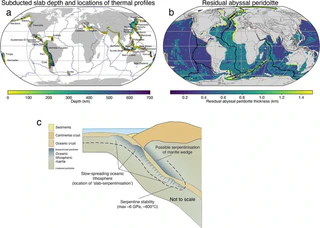
This study develops a new method to estimate how much hydrogen is produced by serpentinization within subducting slabs globally. By combining information about the type of rock being subducted, the geometry and temperature of subduction zones, and a plate tectonic model, the researchers calculate that subduction-zone serpentinization generates between 42 and 240 million kilograms of hydrogen per year.
While this is one to two orders of magnitude less than the hydrogen produced at mid-ocean ridges, it represents a significant and previously unquantified source of this vital gas. The amount of hydrogen produced is most strongly linked to the spreading history of the ocean basin — highlighting how the tectonic history of a slab before it is subducted shapes the chemistry of the deep Earth.