Determining subsurface temperature & lithospheric structure from joint geophysical-petrological inversion: A case study from Ireland
Plain Language Summary
Understanding the temperature deep underground is critical for assessing whether a region could be used for geothermal energy — a clean, renewable energy source. However, direct temperature measurements from boreholes are rare and expensive, so scientists need indirect methods to estimate subsurface temperatures over wide areas.
This study develops a new approach that combines multiple types of geophysical data — including seismic wave speeds, gravity measurements, surface heat flow, and rock property measurements — within a single computational framework. By jointly inverting all of these datasets together, the method produces more reliable maps of underground temperature and the structure of the Earth’s outer layer (the lithosphere) than any single dataset could provide alone.
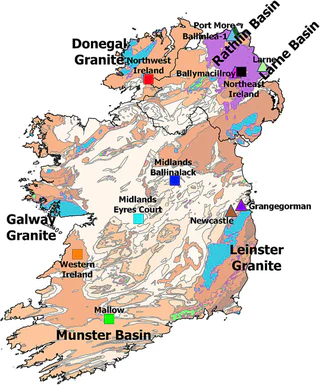
Applied to Ireland as a test case, the results show that the thickness of the lithosphere and the crust are the primary controls on the geothermal gradient, with thinner lithosphere areas showing higher temperatures closer to the surface. In some locations, rocks rich in radioactive elements generate extra heat that boosts the geothermal gradient locally. This methodology can be applied to any region with limited direct temperature data, helping to identify promising areas for geothermal energy development.