Regional carbonate compensation depth variability in the Pacific Ocean since the Oligocene
Plain Language Summary
The deep ocean floor acts as a massive carbon warehouse, storing vast amounts of carbon in the form of calcium carbonate shells from tiny marine organisms that sink to the seafloor after they die. But this carbon is only preserved above a certain depth — below the carbonate compensation depth (CCD), the water becomes so corrosive that it dissolves carbonate faster than it accumulates. The CCD therefore acts like a chemical boundary that controls how much carbon the deep ocean can store.
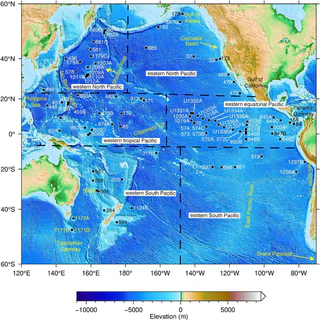
This study produces six new regional reconstructions of how the CCD has changed across the Pacific Ocean — the world’s deepest and largest ocean basin — over the past 30 million years. The results reveal that the CCD has fluctuated by more than a kilometre in some regions, driven by changes in climate, the growth and retreat of Antarctic ice sheets, and the reorganisation of ocean gateways that control deep-water circulation.
Notably, the western Pacific CCD shows a distinct deepening around 24 million years ago, interpreted as a delayed response to the expansion of the West Antarctic ice sheet. The study also identifies the well-known late Miocene “carbonate crash” and “biogenic bloom” events in both the western and eastern equatorial Pacific, but with a roughly one million year time lag in the west. These findings provide new insights into how regional ocean chemistry responds to global climate change and can help improve models of the long-term carbon cycle.