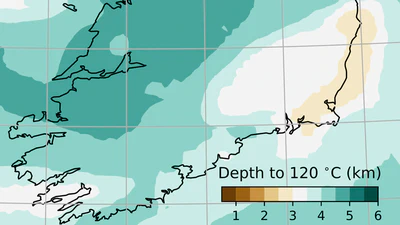
G.O.THERM Project: an integrated approach to probe the deep thermal structure of Ireland
A 3D temperature model of Ireland has provided a unique insight into the thermochemical structure within Ireland's subsurface.

A 3D temperature model of Ireland has provided a unique insight into the thermochemical structure within Ireland's subsurface.
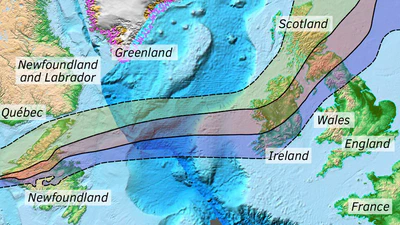
Heat‐producing elements have been more successfully reworked into the upper crust of Laurentia than Avalonia during continental accretion.
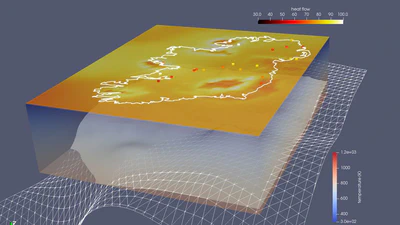
Temperature models for assessing geothermal potential are usually concerned with the upper 5 km of the crust. The configuration of deeper crustal lithologies, and the …
Surface heat flux is highly sensitive to small temperature fluctuations at varying timescales. The magnitude of these variations depend on the duration of climatic fluctuations and …
Geothermal power is traditionally viable only in volcanically active regions, however direct application of this energy source for industrial heating can exploit low enthalpy …
Magnetic data is one of the most common geophysics datasets available on the surface of the Earth. At long wavelengths it pertains information on the depth at which rocks lose …
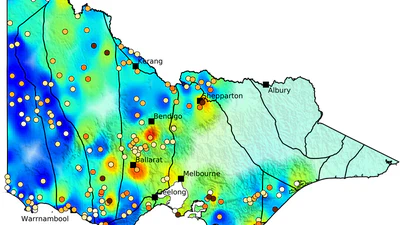
182 recent heat flow determinations and 66 new heat production measurements for Southeastern Australia significantly increase our understanding of local and regional lithospheric …